

Delivertree
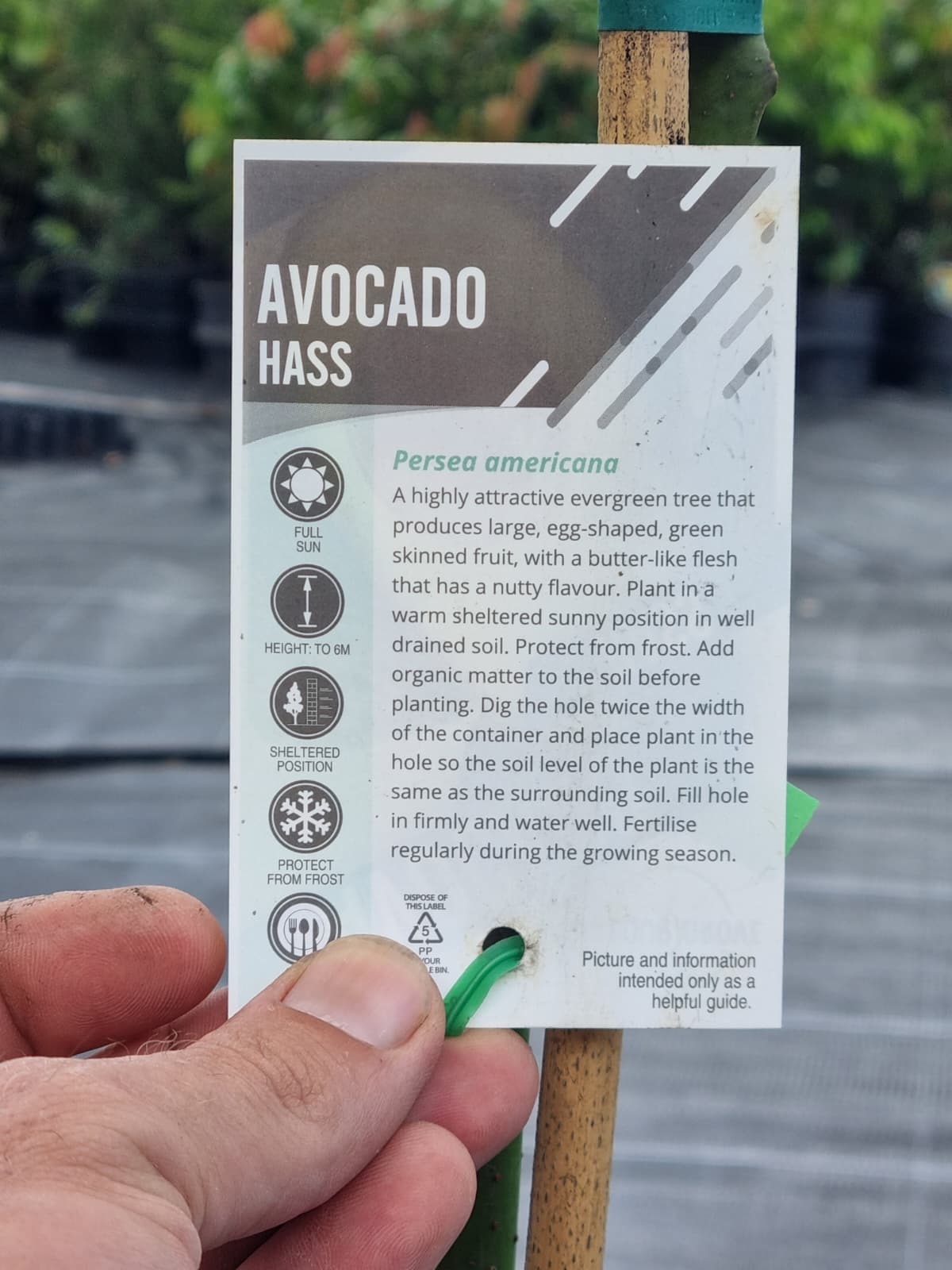
Hass Avocado
Hass Avocado
Couldn't load pickup availability
Creamy, nutty, high-oil avocados from a compact, backyard-friendly tree—ideal for warm Brisbane & SEQ gardens.
Quick Overview
- Common name: Hass Avocado
- Botanical name: Persea americana 'Hass'
- Family: Lauraceae
- Origin: Central America; cultivar selected in California
- Mature size (H × W): 4–6 m × 3–5 m unpruned (can be kept smaller)
- Growth rate: Fast in warm weather
- Position: Full sun (6–8+ hrs); warm, protected microclimate; excellent drainage
- Climate: Excellent in SE QLD; protect young trees from frost and wind
- Chill hours: Not required
- Pollination: Type A; self-fertile, but higher yields with a Type B nearby (e.g., Shepard, Bacon, Fuerte)
- Rootstock: Grafted (clonal or seedling; supplier-dependent). Clonal rootstocks improve vigour & root-rot tolerance
- Fruiting season (SEQ): Winter–spring (roughly Jun–Oct)
- Fruit & flavour: Thick, pebbly skin; rich, nutty, buttery flesh; ripens off the tree
- Container friendly: Challenging—best in ground; if in a pot use 100–150 L, superb drainage, and regular pruning
- Water needs: Moderate and consistent; avoid waterlogging
- Maintenance: Moderate; tip prune after harvest; keep canopy open
- Pest & disease: Watch Phytophthora root rot, anthracnose; monitor mites, lace bug, and fruit fly
- Wildlife: Bee-friendly flowers
- Etymology: Persea is an old name for a laurel-like tree; americana = “of the Americas”; ‘Hass’ honours grower Rudolph Hass.
Why we love it
- Classic café-quality fruit with creamy, nutty flavour
- Reliable in Brisbane’s subtropical climate
- Manageable size with annual tip-pruning
- Great yields, especially with a Type B pollinator nearby
Where it thrives (Brisbane & SEQ)
- Sun & heat: Full sun; mulch well to buffer summer heat
- Wind: Shelter young trees from hot/dry winds
- Frost: Tender below ~1–2 °C; cover juveniles on cold nights
- Humidity: Handles humidity—prioritise airflow to reduce disease
- Soil: Free-draining sandy/loam; pH ~6–6.5; avoid heavy clay. If drainage is slow, mound 20–30 cm and add compost + gypsum
Planting & Care
When to plant: Spring–early summer in SEQ (or any warm spell with irrigation).
Soil prep: Improve the top 30–40 cm with quality compost; raise on a mound if drainage is marginal.
Planting depth: Set so the top of the root ball sits just 1–2 knuckles (2–4 cm) below finished soil. Do not bury the graft.
Watering:
- At planting: Soak thoroughly.
- Establishment (warm months): Deep water 2–3×/week for 4–6 weeks, then weekly.
- Winter: Water only once a week if needed; skip if soil stays moist and foliage looks happy.
- Long-term: Even moisture; never waterlog—root rot risk.
Mulch: 5–10 cm organic mulch, kept off the trunk; renew each spring.
Feeding:
- Slow-release fruit/citrus fertiliser with trace elements in spring and late summer.
- Avocados dislike salty/chloride-heavy feeds; go steady and water in well.
Pruning & training:
- Tip-prune after harvest to keep height 2–3 m and encourage lateral branching.
- Open the centre for airflow; remove crossing/weak wood.
Pollination details: Type A; self-fertile but sets better with a Type B (Shepard, Bacon, Fuerte) within ~10–15 m.
Expected yield: From year 3–4 (grafted), maturing to 20–50 kg per season on a well-grown compact tree.
Harvest & Use
- Ripeness cues: Fruit picked mature will soften off the tree; skin darkens and yields slightly to gentle pressure.
- Picking: Clip with a short stem; avoid tearing the skin.
- Storage: Ripen at room temp; refrigerate once soft; pulp freezes well.
- Best uses: Smashed avo, guacamole, sushi, smoothies, salads.
Pests & Diseases (SEQ)
- Common issues: Phytophthora root rot (poor drainage), anthracnose on fruit, mites/lace bug bronzing; fruit fly pressure varies by suburb.
- Prevention: Excellent drainage and mulching, avoid trunk wetting, keep canopy open; bag/net fruit if fly pressure is high.
Companion Planting
- Alyssum and marigold for beneficial insects
- Comfrey as chop-and-drop mulch around the dripline
- Flowering groundcovers to draw pollinators
FAQs
- Is it self-fertile? Yes—Hass is Type A and will fruit alone, but a Type B nearby boosts yield.
- Will it fruit in a pot? Possible but tricky—use 100–150 L, premium mix, and strict watering/drainage.
- When will I get fruit? Typically year 3–4 from a grafted tree under good care.
- Do I need to protect from fruit fly? Often helpful—bag/net fruit once they reach marble size if your area has pressure.
Tip: Avocado roots need air—when in doubt, mound higher and water less often but more deeply.
Share