

Delivertree
Emperor Mandarin Tree - Grafted
Emperor Mandarin Tree - Grafted
Couldn't load pickup availability
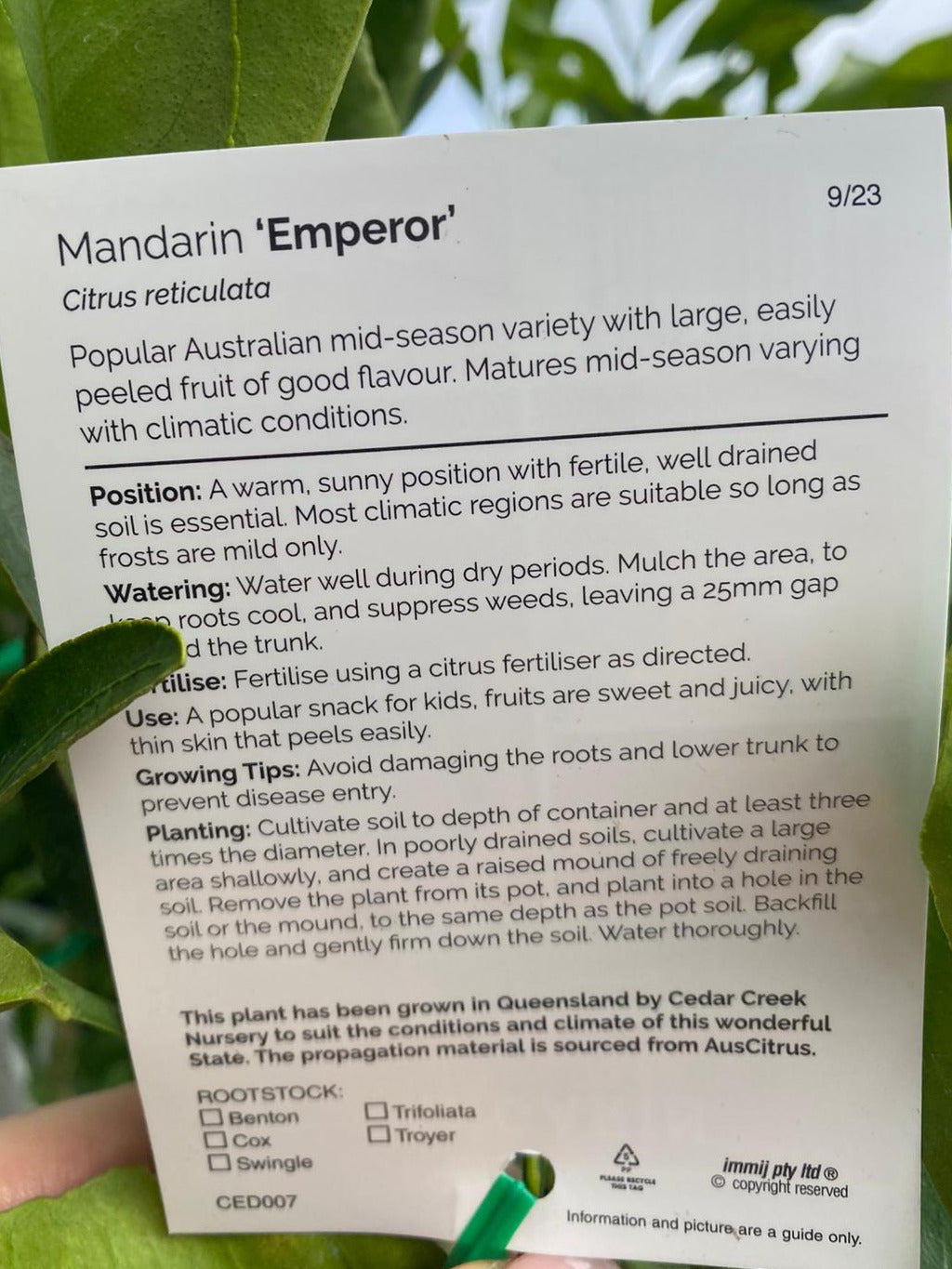
Emperor Mandarin is a popular mid-season mandarin known for heavy crops of sweet, juicy fruit with a loose, easy-peel skin. It’s a fantastic backyard citrus for Brisbane and SEQ—especially if you want to extend your mandarin season after Imperial—offering reliable performance in full sun with good drainage and regular feeding.
Quick Overview:
- Common Name: Emperor Mandarin
- Botanical Name: Citrus reticulata ‘Emperor’
- Origin: Australian-grown cultivar widely planted for home gardens and orchards
- Height & Width: Typically 3–5 m high × 3–4 m wide in the ground (can be kept smaller with pruning)
- Foliage: Glossy evergreen foliage; dense canopy with year-round appeal
- Flowers: Fragrant white blossoms in spring
- Wildlife Attraction: Flowers attract bees and other pollinators
- Fruit: Medium to large mandarins with deep orange skin; very easy to peel; sweet, mild flavour; usually few seeds
- Position: Full sun for best flowering, sweetness, and fruit colour
- Soil: Well-drained soil is essential; mound or raise the planting area if you have clay or slow drainage
- Tolerance: Heat tolerant once established; protect young trees from frost, waterlogging, and strong drying winds
- Maintenance: Moderate; regular citrus feeding + consistent watering during fruit swell helps quality; thin fruit if the tree overcrops
- Propagation: Grafted. Remove any suckers from below the graft
- Etymology: Citrus is the classical Latin name used for citrus trees; reticulata means “netted,” referring to rind texture often associated with mandarins
Detailed Description:
Emperor Mandarin is a go-to variety when you want a generous, reliable crop and that classic “easy-peel” mandarin experience. The fruit is sweet and juicy, with a looser rind that separates easily from the segments—making it a favourite for kids, lunchboxes, and fresh snacking.
In Brisbane and SEQ conditions, Emperor does best with full sun, free-draining soil, and steady moisture through flowering and fruit development. It can set very heavy crops, so a little fruit thinning (especially on younger trees) can improve fruit size and reduce branch stress. Harvest when the fruit is coloured and sweet—don’t leave it hanging too long if you notice drying or quality drop.
Growth and Maintenance:
- Watering: Deep water to establish; once established, water during extended dry periods and consistently during flowering/fruiting for better fruit size
- Fertilising: Feed with a quality citrus fertiliser during active growth; add trace elements if foliage shows pale/yellowing symptoms
- Mulching: Maintain a 5 cm organic mulch layer to conserve moisture and protect shallow feeder roots (keep mulch away from the trunk)
- Fruit thinning: If the tree overcrops, thin some fruit early to improve size and reduce limb strain
- Graft care: Remove any shoots growing from below the graft (rootstock suckers)
Pruning:
- Shape & airflow: Lightly prune after harvest to keep the canopy open and reduce pest/disease pressure
- Size control: Tip-prune to maintain a compact tree for courtyards and smaller gardens
- Clean-up: Remove dead, crossing, or inward-growing branches; avoid heavy pruning right before flowering
Common Uses:
- Backyard fruit tree for Brisbane and SEQ homes
- Season-extender when planted alongside early (Imperial) and late mandarins
- Productive feature tree near entertaining areas
- Espalier along a sunny fence or wall to save space
Planting Benefits:
- Mid-Season Mandarin: Helps extend your mandarin harvest through winter in many areas
- Super Easy Peel: Loose rind makes it one of the easiest mandarins to peel
- Heavy Cropper: Known for strong yields with good feeding and sun
- Family Favourite: Sweet, juicy fruit that suits fresh eating and lunchboxes
Share